
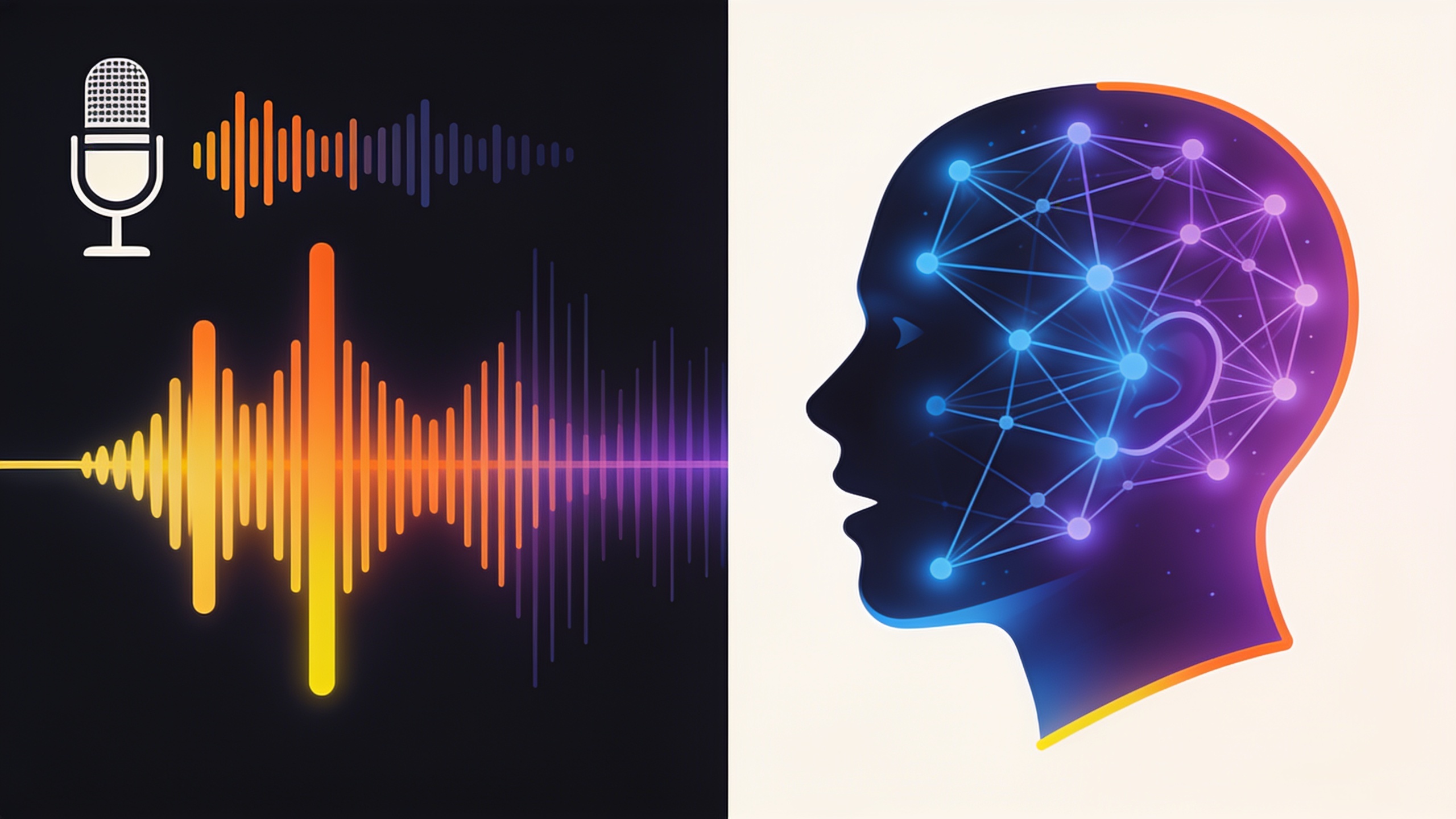
Voice cloning is AI that studies a real person's voice, then generates brand-new speech that sounds like them saying things they never actually said. Under the hood, it uses deep learning models trained on audio samples to capture pitch, tone, rhythm, and even the little emotional wobbles in someone's delivery, then reproduces all of that from any text you throw at it. If you've ever squinted at this stuff and wondered how it works, and whether it's safe, legal, or actually useful for your content or business, that's exactly what I want to walk you through. Plain English. No jargon avalanche.
We'll get into the real science, the ethical guardrails the decent platforms bake in, and the ways creators, podcasters, and companies are already using cloned voices right now.
Table of Contents
- What Is Voice Cloning Technology?
- How Does Voice Cloning Technology Work, Step by Step?
- How Much Audio Do You Need to Clone a Voice?
- Is Voice Cloning Technology Safe? Ethical Considerations
- Practical Applications for Creators and Businesses
- Voice Cloning Use Cases Compared by Industry
- How to Get Started With Voice Cloning
- Frequently Asked Questions
What Is Voice Cloning Technology?
Voice cloning is a branch of AI voice synthesis that builds a digital copy of one specific human voice, so it can speak content the original person never recorded. Instead of scrolling a dropdown of generic robot voices, you hand the system a sample of a real voice and it learns that person's acoustic fingerprint. The timbre. The accent. The cadence. Those weird little pauses everyone has and never notices they have.
And this is where it splits off from the old-school text-to-speech you probably remember. Those systems stitched together pre-recorded chunks of sound, or leaned on one "house voice" for everything. Clunky. Modern voice cloning runs on neural networks trained across huge piles of human speech, then fine-tuned on a small sample of your target voice to spin up a personalized model. What comes out sounds like a specific person, not a generic narrator reading a phone menu.
If you're brand new to all of this, honestly, it helps to zoom out first and understand the bigger category before you dive into cloning specifically. Tarang's guide on what AI voice generation actually is covers the basics of synthetic speech, and it's a solid primer if terms like "TTS," "neural voice," and "voice model" are still smooshing together in your head.
Most voice cloning platforms today, Tarang included, bundle cloning with a bunch of related tools. Text-to-speech, libraries of ready-made voices, voice separation (pulling vocals out of a track away from the instruments). They ship together because they're all built on the same overlapping AI audio plumbing.
How Does Voice Cloning Technology Work, Step by Step?
Voice cloning works by pushing a recorded voice sample through several AI stages, cleanup, feature extraction, model training, and synthesis, that turn a short clip into a reusable digital voice. Let me show you what actually happens between the moment you upload a sample and the moment a finished audio file pops out.
Step 1: Collecting and Cleaning the Sample
It all starts with a voice sample. A recording of whoever's voice you're cloning. Tarang's pipeline, for example, wants roughly 20 to 30 seconds of clean audio in MP3 or WAV. But before that clip is good for anything, it needs a scrub-down. This "Research & Prep" stage usually handles a few things: Voice Activity Detection to figure out which bits are actual speech versus silence or background junk, denoising to kill hums and room echo and that faint hiss that would otherwise get permanently baked into your clone, and transcription (often via speech-recognition models like Whisper) so the system knows precisely which sounds map to which words.
People underestimate this step. Big time. A noisy, sloppy sample gives you a noisy, sloppy clone. Garbage in, garbage out, and voice AI is no exception.
Step 2: Feature Extraction and Model Training
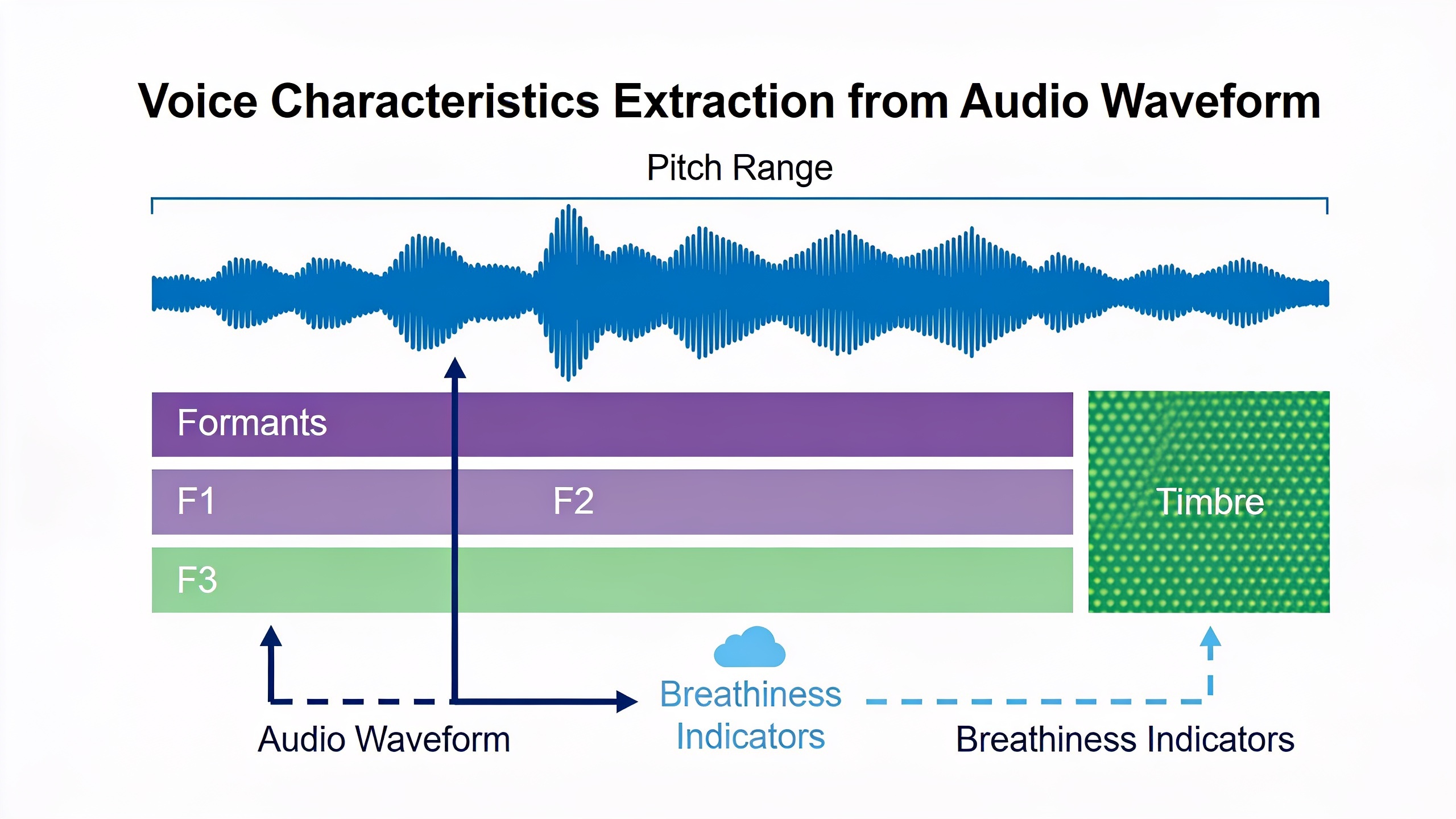
Once the audio's clean and chopped up neatly, the AI digs into the features that make your voice yours. Pitch range, formants (the resonance frequencies that shape your vowels), how fast you talk, your timbre, and the micro-stuff like breathiness or vocal fry. It compares all of that against patterns it learned from massive general speech datasets, then nudges a model until it matches your specific fingerprint.
In Tarang's setup, this "Clone & Train" phase is all about voice matching and timbre, running on GPU infrastructure to build what they call a reusable voice profile. The nice part? Once it's built, it can generate new speech whenever you want without needing the original recording again.
Step 3: Text-to-Speech, Now In Your Voice
With a trained profile ready, you type or paste any script and the system speaks it back in the cloned voice. This is the spot where TTS and cloning shake hands. The TTS engine deals with pronunciation, sentence rhythm, and pacing, while the cloned voice model supplies the actual vocal character. Tarang calls this the "Generate & Review" stage, and it includes emotion control so the output carries a tone that fits your content instead of sounding flat and dead. There's a preview step before you lock anything in, which, trust me, you'll use.
Step 4: Export and Tweaking
Last stop: exporting studio-quality audio, usually MP3 or WAV, ready to drop into a podcast, a video, an ad, an app, whatever. Most platforms let you regenerate a line or adjust the delivery if the first take doesn't land right. And that's the quietly amazing part. Unlike a live voice actor, a cloned voice will re-record instantly, in any language, at 3am, without a coffee break.
How Much Audio Do You Need to Clone a Voice?
It depends on the platform, but the requirement has shrunk dramatically compared to a few years back. Tarang is built to clone from just a few seconds of audio, with roughly 20-30 seconds of a clean sample recommended if you want higher-fidelity results. For a point of comparison, OpenAI's Voice Engine, which they previewed publicly in March 2024, was demonstrated cloning a voice from a 15-second sample.
That's a genuinely big deal. Early voice cloning research needed minutes to hours of studio-grade recordings per voice. The jump to "few-shot" cloning, training a usable model from a handful of seconds, is basically the whole reason regular creators can touch this now instead of only well-funded studios with recording budgets.
That said, more audio still helps. A short clip captures the average version of your voice, but a longer or more varied sample, one with different emotional tones, different sentence lengths, different speeds, hands the model more nuance to work with. This matters most for cross-lingual cloning, where the AI has to preserve your vocal identity while producing sounds in a language you might never have spoken a word of.
Is Voice Cloning Technology Safe? Ethical Considerations
Voice cloning isn't inherently unsafe, but it carries very real risks around consent, impersonation, and fraud, and both platforms and regulators are scrambling to keep up. The tension is dead simple: the same feature that lets a podcaster patch a flubbed line without re-recording the whole episode also lets a scammer fake someone's voice on a fraud call. Same tool. Wildly different intentions.
The Consent Problem
The big ethical question is whether the person being cloned actually agreed to it. Cloning your own voice to narrate your own stuff is a completely different animal from cloning someone else, a celebrity, a family member, a coworker, without them ever saying yes. Legit platforms expect you to have rights to whatever voice you upload, and to use cloned voices only for legal, authorized purposes.
Fraud and Impersonation Risks
Regulators are watching this closely. Back in 2023, the U.S. Federal Trade Commission put out a consumer alert warning people about scammers using AI voice clones, often built from just seconds of audio scraped off social media, to impersonate family members in fake-emergency phone scams. And then in late 2023 the FTC launched a "Voice Cloning Challenge," basically asking technologists to pitch ways to detect, track, and stop malicious cloning. So no, this isn't some hypothetical worry. It's a problem regulators are actively trying to get ahead of.
What Responsible Use Actually Looks Like
For creators and businesses, doing this ethically really boils down to a few things. Use your own voice, or one you've got explicit written permission to clone. Tell your audience when the content is AI-generated rather than a live human recording, especially in advertising, journalism, or customer service where it genuinely matters. And don't clone public figures, politicians, or private individuals to make content that could mislead people about who's really talking.
The tech itself is neutral. It's a tool, honestly not that different from Photoshop for images. The ethics live entirely in how you use it, and that responsibility sits with whoever's generating the content, not just the platform handing over the tool.
Practical Applications for Creators and Businesses
The single most valuable thing voice cloning does in the real world is let one person's voice stretch across way more content than they could ever physically record, in more languages, more formats, less time. Here's how that shakes out in practice.
For Creators and Podcasters
Podcasters can fix a mispronunciation, drop in a fresh intro line, or extend an episode without booking studio time all over again. Platforms built with creators in mind (Tarang explicitly lists content creators, podcasters, game studios, and voice artists as its audience) let a single person crank out voiceovers, ad reads, or narration in their own cloned voice on demand. And increasingly in languages they don't personally speak, thanks to cross-lingual cloning.
For Businesses and Customer-Facing Voice AI
Companies lean on voice cloning to keep a consistent brand voice across IVR systems, training videos, e-learning modules, and multilingual support, without re-hiring voice talent every single time the script changes. Say a business wants the same brand voice across its Spanish, Hindi, and Japanese support scripts. Instead of casting and directing three separate voice actors, they generate all three from one cloned reference voice. Cheaper, faster, and it actually sounds like the same "person" everywhere.
For Game Studios and Voice Artists
Game studios can prototype dialogue fast during development instead of waiting on full recording sessions. And voice artists can license or reuse their own cloned voice for smaller projects that don't justify a full studio booking, which basically turns their voice into a reusable creative asset instead of a one-time recording. Not a bad deal for them, actually.
Cross-Lingual and Multilingual Reach
One of the more useful shifts here is cross-lingual voice cloning: record your voice once in one language, then generate speech in a different language while keeping your vocal identity intact. Tarang supports voice cloning and TTS across 100+ languages, including major regional Indian languages like Hindi, Gujarati, Marathi, Tamil, Telugu, Bengali, Kannada, Malayalam, Odia, and Punjabi, alongside global ones like Spanish, French, German, Japanese, Chinese, Korean, and Arabic. If you're a business or creator specifically chasing Indian-language audiences, that regional coverage is a real differentiator, because a lot of global voice tools basically stop at a handful of the big world languages and call it a day.
Voice Cloning Use Cases Compared by Industry
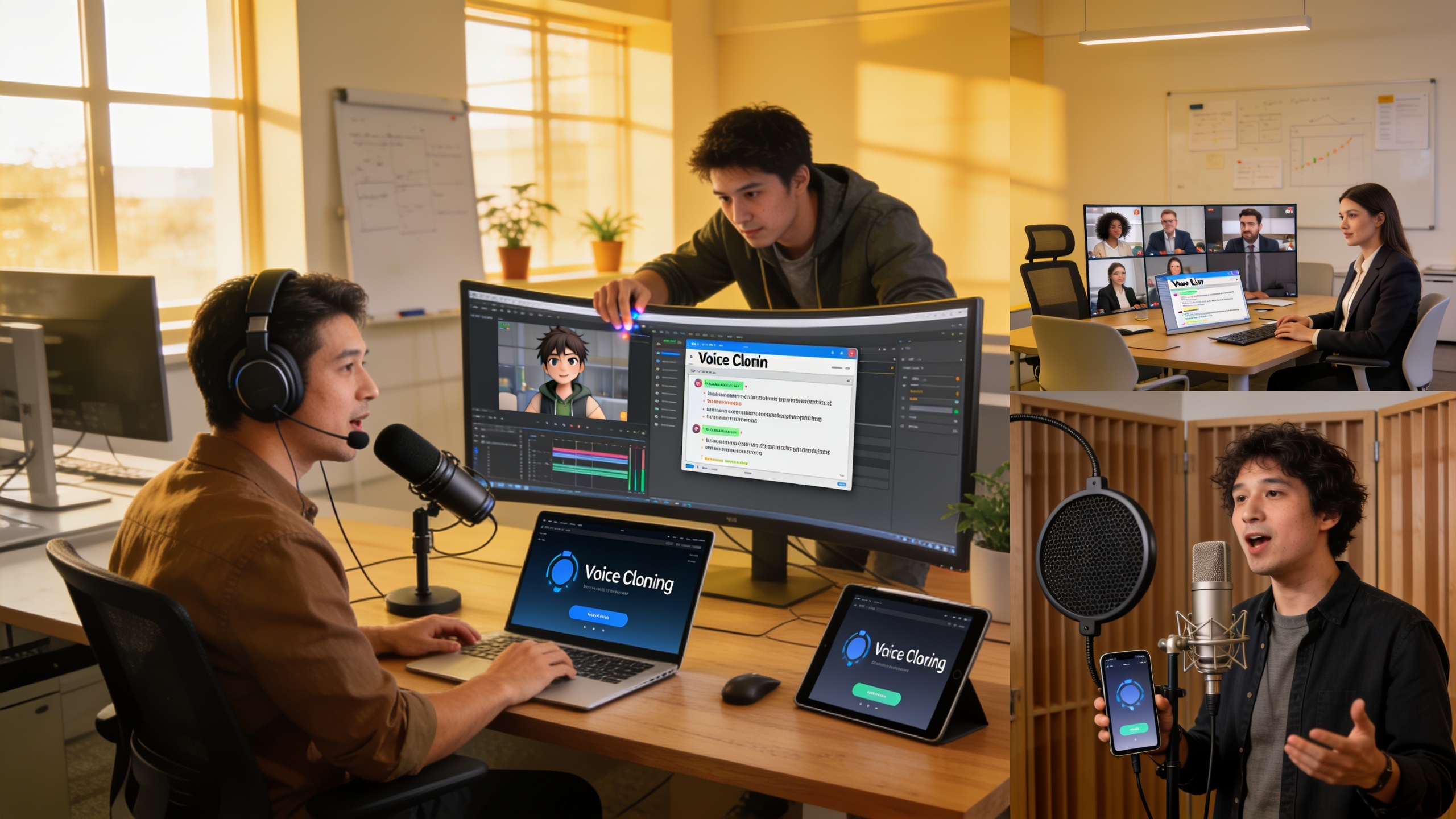
The right way to use voice cloning shifts a lot depending on who's holding the tool and why. Here's a quick comparison of how different groups typically put it to work, based on common industry use cases.
| User Type | Primary Use Case | Typical Benefit |
|---|---|---|
| Content Creators | Voiceovers, narration, video content in a personal cloned voice | Faster content turnaround without repeated studio recording |
| Podcasters | Correcting flubs, inserting new lines, multilingual episode versions | Fewer re-recording sessions, expanded audience reach |
| Businesses | IVR systems, e-learning, multilingual customer support scripts | Consistent brand voice across languages and channels |
| Game Studios | Dialogue prototyping during development | Faster iteration before final voice-acting sessions |
| Voice Artists | Licensing a reusable version of their own voice | New revenue and project flexibility from a single asset |
How to Get Started With Voice Cloning
Getting started usually means picking a platform, recording or uploading a clean voice sample, and generating your first bit of synthetic speech to review before you scale anything up. In practice, the workflow goes something like this:
- Pick a platform that covers the languages and use case you actually need, whether that's regional Indian language support, cross-lingual cloning, or just plain English narration.
- Prep your voice sample. Record 20-30 seconds of clear audio in a quiet room. No background noise, no music, no overlapping chatter. Clean in, accurate clone out.
- Upload it and let the AI chew on it. The platform cleans, transcribes, and analyzes your sample, then builds a voice profile. That's the "Research & Prep" and "Clone & Train" stages I described earlier.
- Write or paste your script. Type what you want spoken, and pay attention to punctuation and pacing, because that genuinely affects how natural the result sounds.
- Generate, preview, refine. Listen back, tweak emotion or pacing if the platform lets you, and regenerate specific lines that miss.
- Export. Download the finished file, usually MP3 or WAV, ready for your podcast, video, or app.
Tarang follows this general shape, from voice sample and script input through its "Tarang Engine" stages of research and prep, clone and train, generate and review, and finally download and export as high-fidelity MP3 or WAV.
Frequently Asked Questions
Do I need fancy recording gear for this?
Nope. A quiet room and a decent mic help, sure, but most modern platforms are built to work with short, clean smartphone or headset recordings. No studio required. The main thing is keeping background noise down and your audio consistent in volume and tone.
Can I clone my voice and make it speak a language I don't actually speak?
Yes, and it's called cross-lingual voice cloning. It's a core feature of platforms like Tarang, which can clone your voice in one language and generate speech in any of its 100+ supported languages while holding onto your tone and vocal characteristics.
Does Tarang handle regional Indian languages like Gujarati or Marathi?
It does. Tarang supports a wide range of them, including Hindi, Gujarati, Marathi, Tamil, Telugu, Bengali, Kannada, Malayalam, Odia, and Punjabi, on top of the global languages. That regional depth is a real standout, since plenty of global voice cloning tools just don't go this deep on Indian languages.
Is it legal to clone someone else's voice?
Depends on consent and where you are, but cloning another person's voice without permission, especially to impersonate them for fraud, deception, or unauthorized commercial use, drags you straight into legal and ethical trouble. That's a big part of why the FTC has warned consumers about AI voice cloning scams and launched initiatives to fight the malicious stuff. Cloning your own voice, or one you've got explicit permission to use, is the safe and standard move.
How's voice cloning different from basic text-to-speech?
Basic TTS turns written text into audio using a generic, pre-set voice. Voice cloning recreates one specific person's unique vocal identity from a sample, then applies that identity to whatever new text you feed it. Think of cloning as personalizing the whole TTS process around one particular voice instead of grabbing a standard synthetic one off the shelf.
Voice cloning has gone from lab curiosity to a genuinely practical tool for creators, podcasters, and businesses in just a few years, mostly because the audio requirements shrank and the language coverage exploded. Once you understand how it works, from cleanup and feature extraction to synthesis and export, using it responsibly gets a whole lot easier. Clone voices you have the right to clone. Disclose synthetic content where it matters. And treat the whole thing as what it really is: a seriously powerful production tool, not a shortcut around consent.